
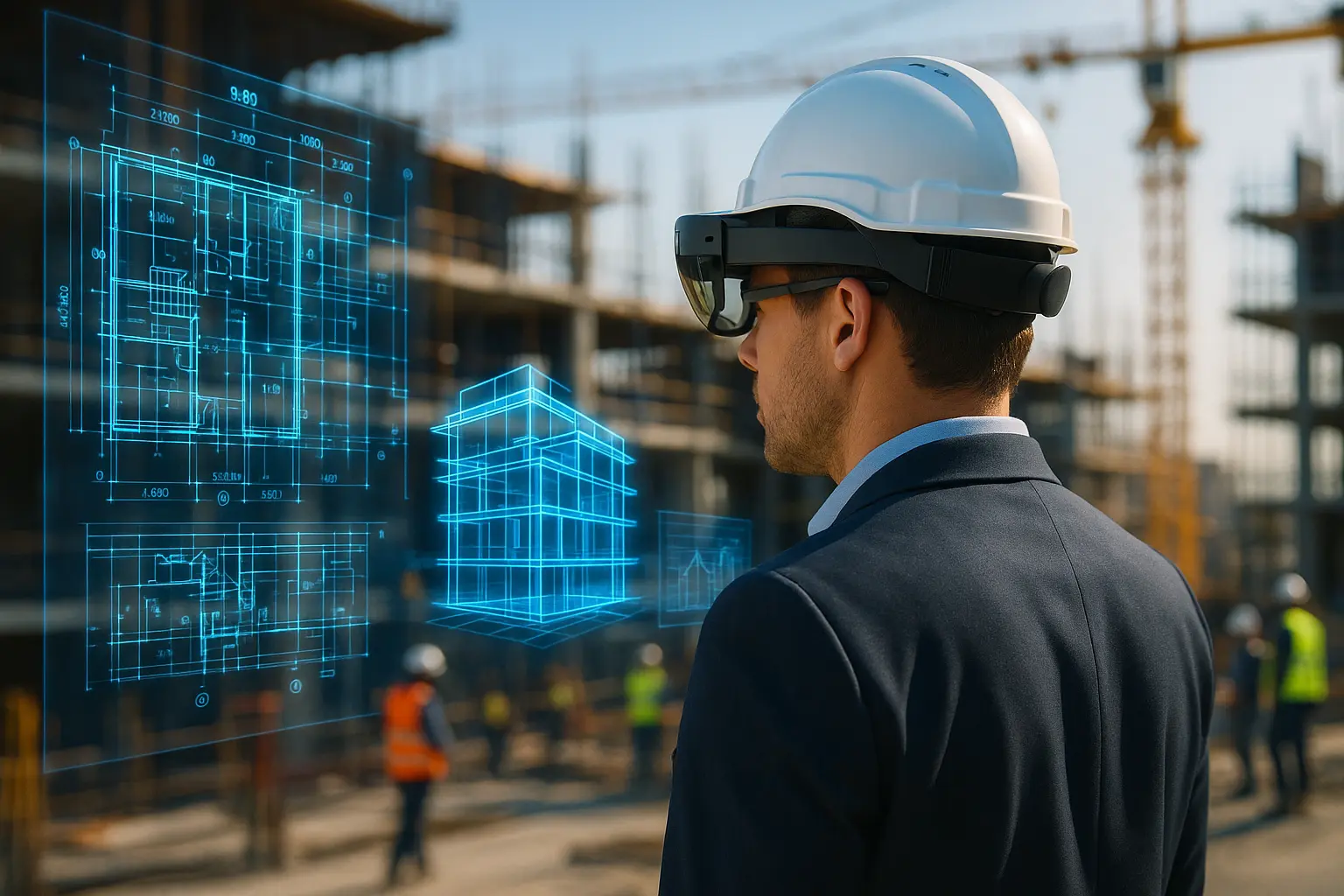
As we stand on the brink of technological innovations, Augmented Reality (AR) is transforming industries across the globe. In the construction sector, this technology heralds a new dawn, promising efficiency, safety, and precision like never before. Imagine a world where digital elements enhance our physical reality, merging real-world project sites with virtual designs to create a seamless blend. This isn’t science fiction; it’s the present and future of construction, where AR propels us toward new potentials.
Our industry is not just built on bricks and mortar; it’s a constantly evolving field where design, data, and technology intersect. As we explore this exciting frontier, let’s delve into how AR is reshaping construction projects, paving the way for a more innovative future.
Revolutionizing Project Design and Visualization
The construction industry has always relied on blueprints and models to visualize project designs. However, with the advent of augmented reality, we’re stepping into a world where blueprints are no longer confined to paper. Instead, they manifest in our real-world environments, allowing for an immersive and interactive design experience.
Imagine standing on a construction site, equipped with AR goggles that overlay digital models directly onto the physical landscape. This isn’t just a digital dream; it’s a reality that enhances our ability to plan, design, and execute projects with remarkable precision. By transforming how we view and interpret design data, AR enables us to foresee potential challenges and rectify them well before they materialize on the ground.
Furthermore, this technology encourages collaboration among project stakeholders. Architects, engineers, and builders can congregate in a virtual space, exploring real-time models and making informed decisions collaboratively. This synergy not only optimizes project designs but also significantly reduces the risk of costly errors and redesigns.
The potential of AR in construction reaches beyond visualization; it offers a lens into the future of project planning and execution, bridging the gap between digital concepts and physical reality.
Enhancing Training and Safety Standards
Safety is a cornerstone of the construction industry, where risks are ever-present. Augmented reality steps in as a powerful ally, providing a revolutionary approach to worker training and safety enhancement. AR introduces a hands-on, immersive learning experience, where workers can practice skills and navigate scenarios within a virtual environment before stepping onto a live site.
Picture a training session where novice workers don AR headsets and are transported into a simulated construction site bustling with activities. Here, they can learn about equipment operation, identify potential hazards, and practice emergency response procedures without the looming fear of real-world consequences. This method not only accelerates learning but also engrains safety protocols in workers’ minds, reducing on-site accidents.
Beyond training, AR equips workers with real-time safety alerts. Imagine receiving instant notifications about potential hazards, or being guided through safe pathways in complex project areas. With augmented reality, the potential to enhance safety standards is immense, leading to safer construction environments and a more informed workforce.
AR doesn’t just change how we train or operate; it fundamentally improves the safety culture within the industry, ensuring that every worker returns home safe at the end of the day.
Streamlining Project Management and Execution
Project management in construction is akin to conducting a symphony, where timing, precision, and coordination dictate success. Enter augmented reality—a technological maestro that harmonizes these elements to streamline management and execution.
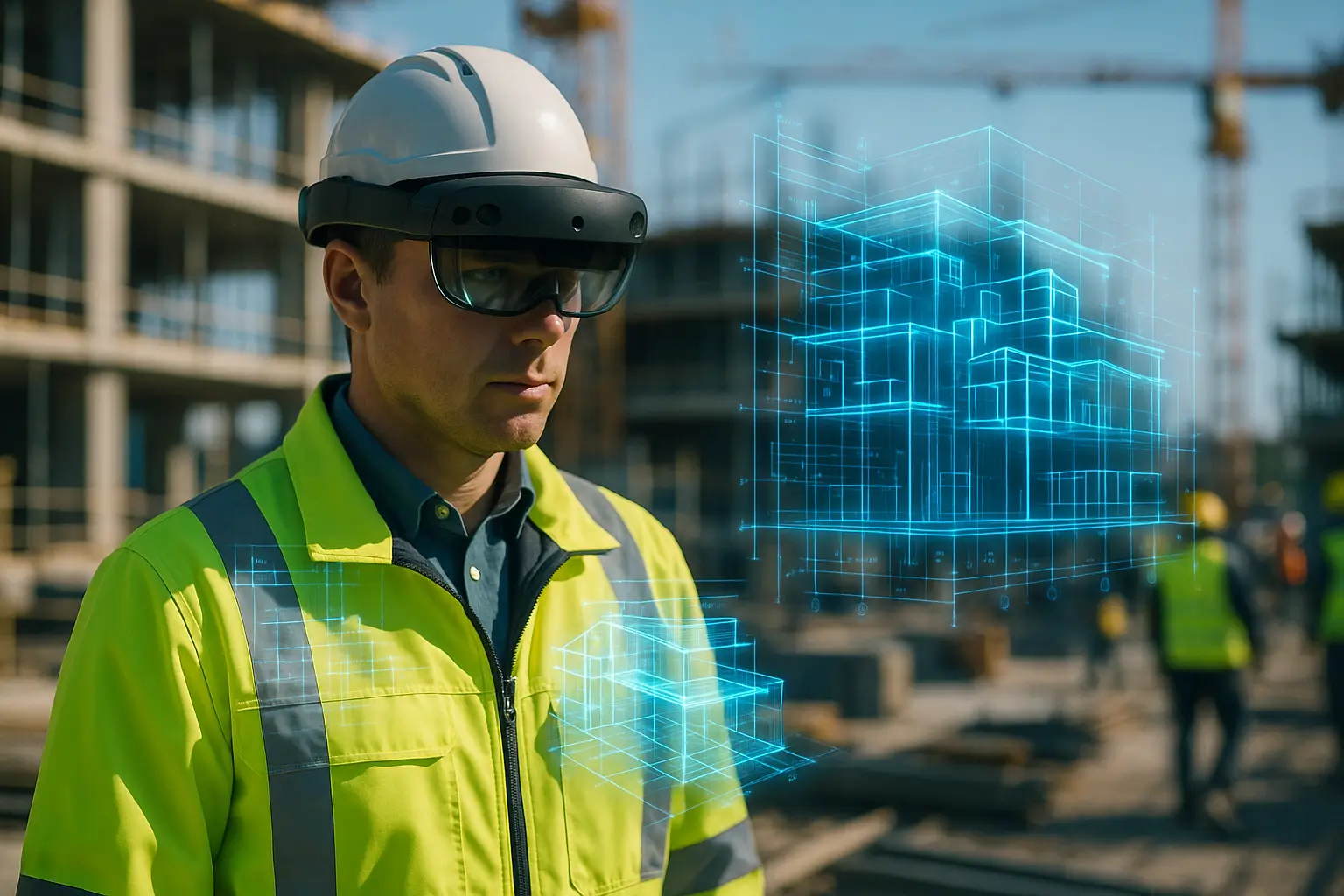
AR enhances project managers’ ability to monitor progress, anticipate delays, and allocate resources effectively. By overlaying digital data onto live project sites, managers can view real-time updates, assess project timelines, and visualize the next steps with unparalleled clarity. This integration of technology ensures that every aspect of the project is aligned, from design to completion.
Moreover, AR facilitates better communication and collaboration within teams. With virtual meetings and shared visualizations, stakeholders can align their goals, address concerns collaboratively, and make informed decisions swiftly. This unified approach not only expedites project execution but also fosters a culture of transparency and accountability.
Incorporating AR into construction projects transforms traditional management practices, offering a streamlined, real-time solution that keeps projects on track while maintaining the highest standards of quality and efficiency.
The Future: A Seamless Blend of Real and Digital Worlds
As we navigate the evolving landscape of the construction industry, it’s clear that the line between the real and the digital is blurring. Augmented reality epitomizes this convergence, serving as a beacon for the future of construction projects.
With AR, we envision a future where every construction site is a digital playground, where workers are empowered with information at their fingertips, and where designs are flexible and adaptable to the evolving needs of our times. This technology opens up a world of possibilities, from sustainable building practices to innovative designs that push the boundaries of architecture.
The potential of AR extends beyond the confines of current projects, offering a glimpse into a future where construction is not just about building structures, but about creating spaces that inspire and adapt to human needs. As we embrace this technology, we are not only enhancing our present capabilities but also paving the way for a future where construction is synonymous with innovation and progress.
In this exciting era, augmented reality stands as a testament to the power of technology to transform industries, redefine possibilities, and ultimately, elevate the construction industry to new heights.
As we reflect on the profound impact of augmented reality in the construction sector, it’s evident that we are building more than structures—we’re shaping the future. AR empowers us to innovate, enhance safety, optimize time, and elevate project outcomes to unprecedented levels.
By embracing this technology, we are crafting a digital blueprint for success, one that prioritizes collaboration, foresight, and sustainability. As we journey forward, let us continue to explore the vast potential of AR, always striving to merge the best of both real and digital worlds to build a brighter, more efficient future in construction.
In the end, the story of our industry is one of transformation, a narrative where augmented reality plays a starring role in crafting a new legacy for generations to come. Let us build tomorrow, today.
FAQ
What is augmented reality and how is it being used in construction?
Augmented reality (AR) is a technology that overlays digital information, such as images, videos, or 3D models, onto the real world, enhancing the user’s perception of their environment. In construction, AR is used to visualize architectural designs, identify potential design clashes, and assist with on-site decision-making.
How does augmented reality improve the efficiency of construction projects?
AR enhances efficiency by providing accurate, real-time visualizations, which help in identifying design discrepancies early on. It allows for better planning and coordination, reducing the likelihood of costly reworks and delays. Moreover, AR can facilitate remote collaboration by providing a shared digital view to all stakeholders.
In what ways can augmented reality assist with construction safety?
AR can improve safety by providing real-time hazard warnings and safety instructions directly to workers on site. It can also be used for virtual safety training, allowing workers to practice and understand protocols in a risk-free environment before stepping onto the actual construction site.
Can augmented reality aid in the maintenance and repair of structures?
Yes, AR can be highly beneficial in maintenance and repair tasks. By overlaying digital information onto physical structures, technicians can easily access schematics, service records, and step-by-step repair guides, making the process more efficient and reducing the chance of human error.
What are the challenges of implementing augmented reality in construction?
Despite its potential, AR implementation faces challenges such as high initial costs, the need for specialized hardware and software, and the requirement for skilled personnel to operate and maintain AR systems. Additionally, integrating AR technology with existing construction practices and ensuring reliability in varied environmental conditions can be complex.