
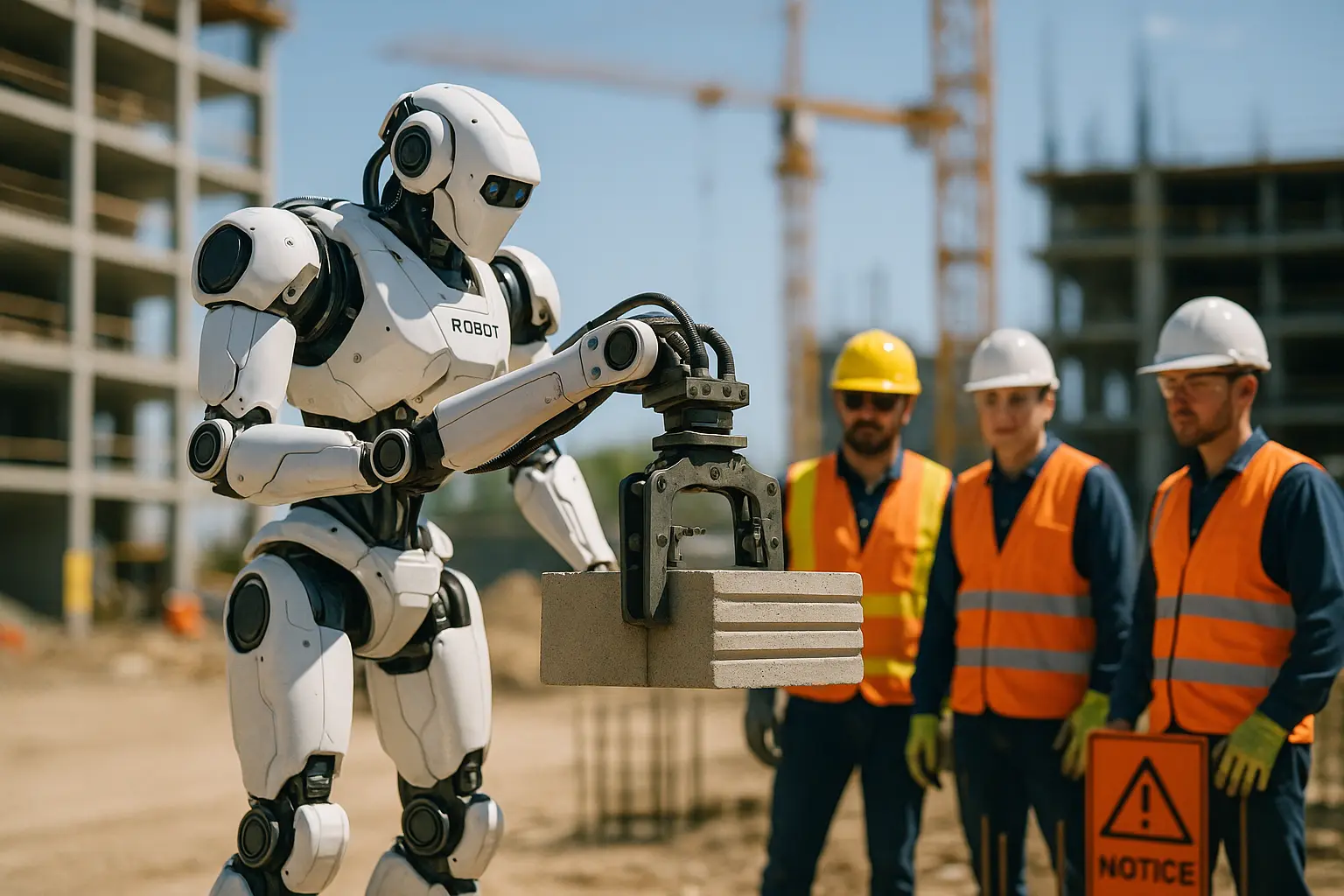
In the evolving world of construction, safety has always stood as the pillar upon which successful projects are built. Yet, as the complexity of these projects grows, so does the web of potential hazards that can jeopardize the safety of those involved. Imagine a world where construction sites are not just places bustling with human activity but are also havens of safety governed by cutting-edge technology. This is not a distant future. It is happening now, with robots and automation heralding a new era in construction safety.
Let’s delve into how this blend of human ingenuity and technological advancement is reshaping the construction landscape. It’s a landscape where data and technology work hand-in-hand with skilled workers to create safer, more efficient environments.
Harnessing Technology for Safer Sites
The integration of robots and automation in construction is no longer a concept confined to science fiction. It’s a reality we are enthusiastically embracing. From drones surveying sites to autonomous machinery handling repetitive tasks, the construction industry is witnessing a transformation in how we perceive and manage safety.
Robotics plays a pivotal role by taking on tasks that pose significant risks to human workers. For instance, autonomous vehicles can perform hazardous operations such as excavation or demolition, reducing the exposure of workers to dangerous environments. With the aid of real-time data analytics, we can also monitor sites for potential hazards and take immediate action to mitigate them.
Human oversight remains crucial, but with the assistance of technology, our workers can make more informed decisions faster and with greater precision. Automation doesn’t replace the human element; rather, it enhances our ability to ensure safety and efficiency, allowing us to allocate human resources to areas where their expertise truly shines.
The Role of Data in Risk Management
In the quest for safer construction sites, data has become an invaluable ally. Through the collection and analysis of vast amounts of information, we can anticipate and address potential risks before they escalate into serious accidents.
We are increasingly leveraging real-time data to monitor construction sites for environmental changes that could impact worker safety. For example, sensors can detect shifts in structural integrity or hazardous levels of dust, providing an early warning system for potential dangers. This predictive capability enables companies to take preemptive actions, safeguarding the wellbeing of their workers.
Moreover, data allows for the development of more effective safety protocols. By analyzing past incidents and near-misses, we can identify patterns and implement strategies to prevent future occurrences. In this way, data contributes to a continuous improvement cycle that enhances safety measures on an ongoing basis.
Innovative Equipment and Its Impact
The dawn of innovative equipment in the construction industry has opened new avenues for enhancing safety. From exoskeletons that support workers‘ physical demands to advanced robotics capable of intricate tasks, the spectrum of modern technology is vast and impressive.
These technological advancements are engineered with precision to minimize human error and elevate safety standards. Exoskeletons, for instance, help alleviate the physical strain on workers, significantly reducing fatigue and the likelihood of accidents. Intelligent machinery, equipped with sensors and AI, can detect potential hazards and autonomously adjust their operations, further safeguarding workers.
Through the continued development and adoption of such equipment, we are not only making construction sites safer but also pushing the boundaries of what is possible in terms of efficiency and precision. Innovation in safety gear and intelligent machinery ensures that construction workers are not left to face risks alone but are empowered by technology designed to protect them.
The Human Element in Technological Advancement
Amidst the rise of technology and automation, it is crucial to acknowledge that the human element remains central to the construction industry. Machines and robots can perform numerous tasks, but the creativity, experience, and intuition of human workers are irreplaceable assets.
With the introduction of automation, our roles are evolving, focusing more on oversight, decision-making, and strategic planning. This shift requires us to adapt and acquire new skills, ensuring we are well-equipped to work alongside our robotic counterparts. Training and education become paramount as we bridge the gap between technology and human capability.
While machines handle the more dangerous tasks, workers can focus on mastering the art of construction with the enhanced safety net that automation provides. This synergy between man and machine not only creates a safer working environment but also allows us to push the limits of innovation and creativity in the construction domain.
As we stand on the brink of a construction revolution driven by technology, it is imperative to recognize the profound impact automation has on enhancing the safety of construction sites. It’s a journey where human ingenuity and robotic precision come together to create a future where risks are reduced, and safety is paramount.
By embracing these innovations, we are not only safeguarding the wellbeing of our workers but also paving the way for a more efficient and progressive industry. The intersection of technology and human effort is not just the future; it is the present, transforming our construction sites into models of innovation and safety.
FAQ
What are some of the significant risks faced by workers on construction sites?
Construction workers often encounter hazards such as falls from heights, being struck by objects, getting caught in machinery, and exposure to harmful substances. These risks can result in injuries, long-term health issues, or even fatalities.
How can automation help in mitigating these risks?
Automation can significantly enhance safety by reducing the need for human involvement in dangerous tasks, such as operating heavy machinery. Automated systems and machines can perform repetitive and hazardous tasks with precision, minimizing the risk of human error and accidents.
What types of automated technologies are currently used on construction sites?
Robotics, drones, and autonomous vehicles are increasingly used on construction sites. Robots can handle tasks like bricklaying and welding, while drones offer aerial surveillance for site inspections. Autonomous vehicles transport materials safely without human intervention, reducing the risk of accidents.
Are there any drawbacks to implementing automation in construction?
While automation offers various safety benefits, it also requires significant initial investment and ongoing maintenance. Additionally, there may be resistance to change from the workforce, and potential job displacement concerns need to be addressed through training and upskilling programs.
How does automation impact the overall productivity and efficiency on construction sites?
Automation can greatly enhance productivity by ensuring tasks are completed accurately and quickly, reducing downtime caused by human fatigue or error. This efficiency not only speeds up project timelines but also helps in maintaining high safety standards throughout the construction process.