
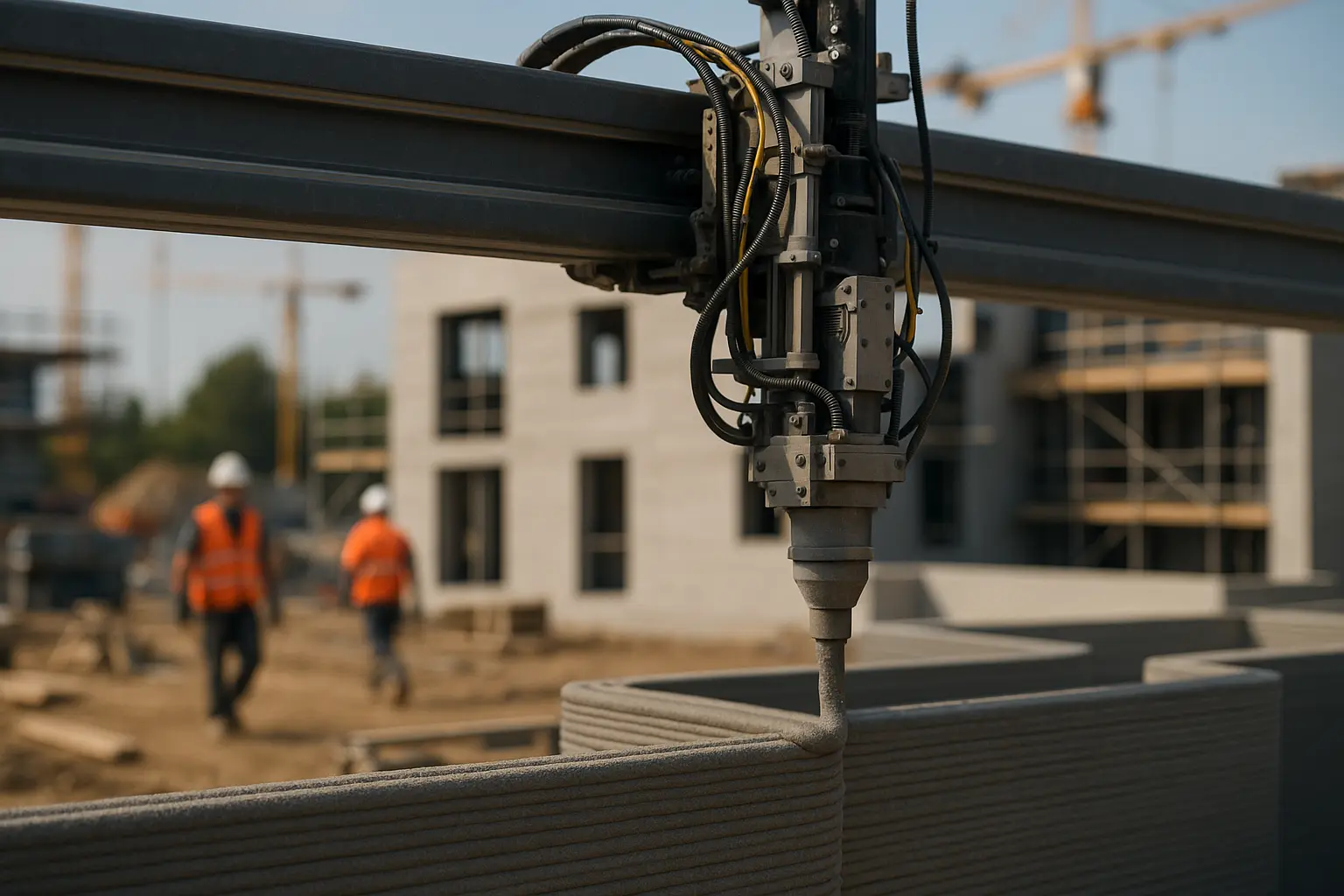
In the past few decades, 3D printing technology has transformed from the realm of imagination to a tangible reality reshaping various industries. Yet, perhaps nowhere is its impact more profound than in the construction sector. Today, we stand at the cusp of a new era where large-scale 3D printing is not only feasible but is redefining the way we build. As we delve into the intricacies of this revolutionary approach, we aim to explore its potential, challenges, and what the future holds. Our journey will navigate through intricate materials, innovative designs, and diverse engineering applications that are paving the way for a sustainable future in construction.
Decoding 3D Printing in Construction
At the heart of any technological transformation lies the core mechanics and principles that underpin its function. When it comes to 3D printing in construction, the process involves the meticulous layering of materials such as concrete to create intricate structures. The idea may seem straightforward, but the execution requires a harmonious blend of engineering precision, design innovation, and robust manufacturing processes.
Historically, the construction industry has relied heavily on traditional methods that, while effective, are labor-intensive and often lack flexibility. Enter 3D printing, a technology that harnesses the potential of digital design and turns it into physical reality. The process begins with a digital model, which is then fed into a 3D printer. This printer constructs the structure layer by layer, following the exact parameters set by the design.
This modern approach offers several advantages, including the ability to create complex geometries that were once considered impossible with conventional methods. Moreover, the precision of 3D printing ensures that the properties of the materials used are optimized, resulting in enhanced mechanical strength and durability. Importantly, large-scale 3D printing also paves the way for significant reductions in material waste, making it a more sustainable option for the building industry. Despite its potential, challenges remain, such as the need for advancements in DPC technology to ensure consistent quality across varying scales of structures.
The Potential of Large-Scale 3D Printing
As we scrutinize the possibilities of large-scale 3D printing, it’s essential to appreciate the potential it holds for the construction industry. This technology offers a paradigm shift, not just in how we build but in how we visualize our built environments. Imagine a world where homes, offices, and community centers can be created swiftly and efficiently through an automated process.
The ability to construct large structures using 3D printing offers unparalleled flexibility and adaptability. From customized residential units to sprawling urban complexes, this methodology allows us to transcend traditional constraints. The versatility of 3D printing facilitates the integration of design elements that were previously either too expensive or logistically unfeasible.
In terms of scale, we are no longer bound by the limitations of conventional materials. Concrete, renowned for its strength and durability, can be precisely manipulated to accommodate varied architectural requirements. This opens doors to a new realm of possibilities, where massive structures can be created with minimal human intervention. Additionally, the engineering principles embedded within large-scale 3D printing ensure that these structures are not only aesthetically pleasing but also adhere to stringent safety standards.
Yet, as with any technology, challenges remain. For instance, DPC technology needs further refinement to guarantee homogeneity and consistency in printed structures. Similarly, the mechanical properties of the materials used must be thoroughly vetted to ensure their longevity in diverse environmental conditions.
Challenges and Innovations in 3D Printing
In navigating the world of 3D printing, addressing the challenges that come with such innovative technology is paramount. As we embrace the future of construction, we must highlight the strides being made to overcome these obstacles.
One primary challenge lies in the material domain. Concrete, while a staple in construction, presents unique hurdles when utilized in 3D printing. Its viscosity, setting time, and curing properties must be carefully managed to ensure a seamless construction process. Innovations in material science have seen the development of specialized mixtures that cater specifically to 3D printing applications. These blends offer enhanced mechanical properties, improved flow, and accelerated curing times. However, ongoing research is crucial to further refine these materials for broader applications.
Another critical area is DPC technology. Consistency and reliability in printed structures demand sophisticated control systems that ensure accurate deposition of materials. This calls for continued advancements in printer technology to facilitate large-scale applications without compromising on quality.
Moreover, the integration of design and engineering principles is a delicate balance. Designers must work closely with engineers to ensure that creative vision aligns with practical feasibility. This collaboration fosters innovation, resulting in structures that are both avant-garde and structurally sound. As we continue to explore these synergies, we are seeing a new wave of building designs that challenge traditional norms and redefine architectural possibilities.
The Future of Construction: Embracing 3D Printing
As we glance towards the horizon, the potential horizons of 3D printing in construction seem boundless. The technology has already proven its worth, and its future applications promise to reshape the very definition of building construction.
Large-scale 3D printing is poised to revolutionize not just how we construct structures but how we conceptualize the built environment. From sustainable homes to innovative public spaces, the scale and scope of potential structures are limited only by our imagination. The ability to incorporate unique design elements and adapt to diverse architectural needs places 3D printing at the forefront of modern construction solutions.
One of the most exciting prospects of this technology is its potential to address global housing shortages. The efficiency and cost-effectiveness of 3D printing could lead to the rapid construction of affordable housing solutions, bringing shelter to millions. Beyond housing, the technology offers the versatility to create large-scale infrastructure projects, from bridges to urban landscapes.
Looking ahead, the continuous evolution of materials, DPC technology, and printer capabilities will further enhance the mechanical properties and durability of 3D printed structures. We are already witnessing a surge in investments and research dedicated to pushing the boundaries of what’s possible. As innovations emerge, the construction industry stands at the brink of a new epoch, where 3D printing becomes an integral part of our urban fabric.
In conclusion, the journey into large-scale 3D printing in construction presents a tantalizing glimpse into the future of architecture and engineering. The technology offers a unique blend of creativity, flexibility, and sustainability, promising to revolutionize how we build and inhabit our spaces.
As pioneers in this field, we recognize the immense potential and responsibility that comes with embracing such transformative innovations. The path forward requires commitment, collaboration, and an unwavering dedication to breaking new ground.
Let us embrace the challenges and opportunities that 3D printing brings, as we continue to build a world that is not only structurally sound but also rich in design, diversity, and possibility. Together, we can shape a future where large-scale 3D printing doesn’t just build structures—it builds dreams.
FAQ
What is large-scale 3D printing in construction?
Large-scale 3D printing in construction refers to the use of 3D printing technology to create building components or entire structures. This method involves additive manufacturing techniques that layer materials like concrete to build up forms from a digital model.
How does large-scale 3D printing benefit the construction industry?
It offers several advantages, including reduced construction time, minimized waste, and the potential for lower labor costs. Additionally, it allows for more complex and customizable designs that might be difficult or costly to achieve with traditional methods.
What materials are commonly used in 3D printed construction?
Common materials include specialized concrete mixes, geopolymer cement, and other composite materials that are designed to be extrudable and set quickly. Research is ongoing into alternative and more sustainable materials, such as recycled plastics and bio-based substances.
Are there any limitations to using 3D printing in construction?
Yes, some limitations include the current high cost of 3D printing machinery, constraints on the size of structures that can be printed, and the need for specialized skill sets to operate the technology. Additionally, regulatory and building code compliance can be challenging.
What is the future outlook for 3D printing in the construction sector?
The future holds promising potential for this technology, with advancements aimed at increasing scalability, reducing costs, and integrating sustainable practices. Innovations in materials and printing techniques are expected to further enhance its viability and adoption across the construction industry.