
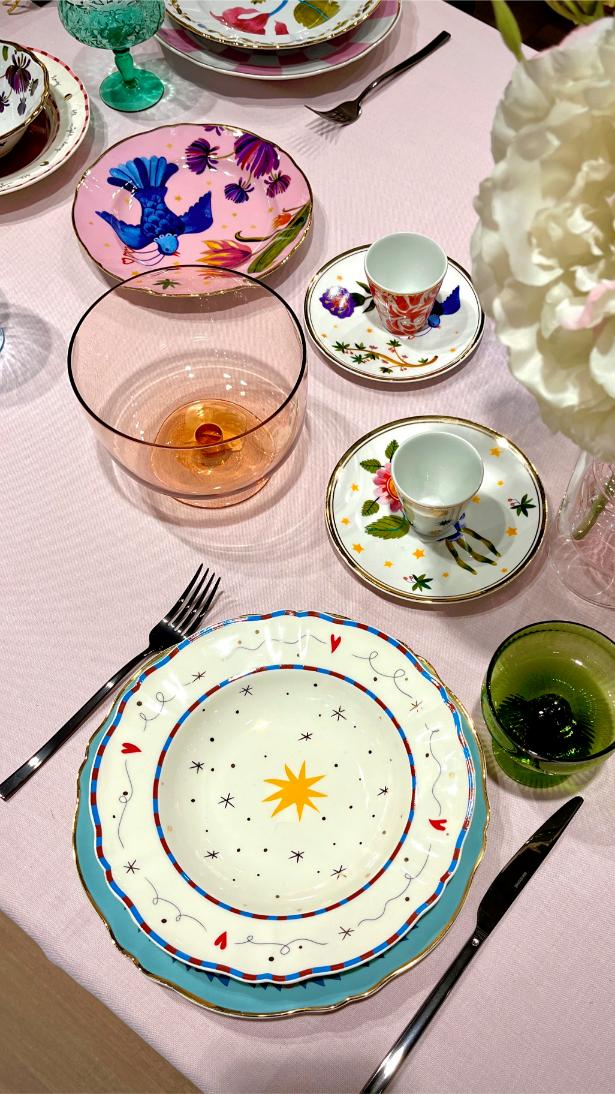
Most people buy their first serious dinner service backwards. They fall for a pattern in a showroom, order twelve covers of it, and work out a year later that it will not go near a dishwasher, that it argues with the table it sits on, and that it now comes out twice a year because using it feels like a risk.
Where to start
- Porcelain and bone china carry formality and survive daily use. Stoneware and earthenware buy character, and charge you in fragility.
- Fewer covers of a better body beat a full twelve-place service of something mediocre.
- The room sets the palette. A laid table is read against the floor, the walls and the light around it, never on its own.
- Over ten years, washing and storage habits damage a collection far more reliably than any single accident.
The ceramic body decides everything that follows
What a plate is made of governs its weight, its translucency, how it survives a knife, and whether it can sit in a dishwasher every night. Everything else about a service, including the decoration people buy it for, is negotiable afterwards. Ceramics are classified mainly by how hot they are fired and how far the clay vitrifies, which is why the four bodies below behave so differently in a working kitchen.
Porcelain is fired high enough to vitrify almost completely, which leaves it dense, close to non-porous and thin at the edge without being weak. That combination is why it remains the reference material for fine dining rooms and for hotel service alike. Bone china takes the same logic further: the addition of bone ash to the mix produces a body that is noticeably lighter and more translucent than porcelain, and unusually resistant for its thinness. It is the most expensive of the four and the most rewarding to hold.
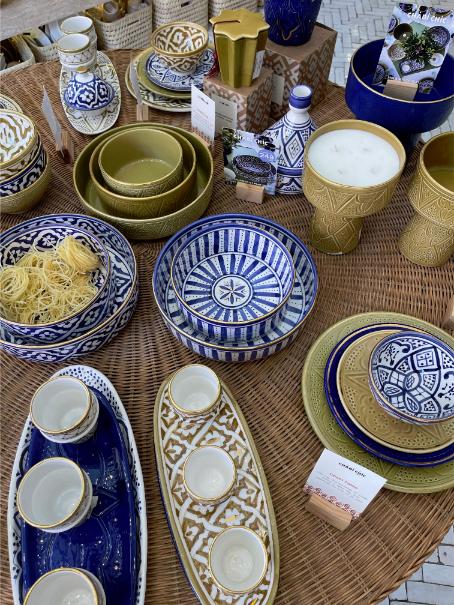
Stoneware is fired lower, stays opaque and keeps a heavier, more granular presence on the table. It suits the raw material palettes that run through most contemporary interiors and it takes reactive glazes beautifully. Earthenware is fired lower still, does not vitrify, and depends entirely on its glaze to stay watertight. It gives you the widest range of colour and hand decoration of any body, and it chips first.
| Body | Character on the table | Everyday tolerance | Best used for |
|---|---|---|---|
| Porcelain | Fine edge, luminous white, quietly formal | High, if the decoration allows it | A service meant to work every day and still dress a dinner |
| Bone china | Lightest in the hand, translucent against light | High, though rims are often hand finished | Formal dining, and anyone who values how a plate feels |
| Stoneware | Heavy, matt, earthy, visibly handmade | Good, but weight makes drops more punishing | Relaxed tables, natural material interiors |
| Earthenware | Strongest colour and pattern range | Lowest. Chips at the rim first | Decorative and seasonal pieces rather than the core service |
Specialist retailers make this comparison easier than a department store does, because they group collections by body rather than by pattern. Sabrina Monte Carlo, for instance, presents its tableware selection that way, which is the order a buyer should be thinking in anyway.
Match the service to the room, not to the menu
A table setting is never seen on its own. It is seen against the floor, the wall behind it and whatever light falls on it at eight in the evening, and that context decides whether a service looks considered or merely expensive.
Modern and minimal rooms
In a pared back room, restraint reads as confidence. Plain porcelain with a clean profile and no rim detail lets the linen, the glassware and the food supply the interest. The risk here is not blandness but scale: oversized coupe plates that look striking in a showroom can crowd a narrow table completely once glasses and serving dishes arrive.
Classic and formal rooms
Traditional dining rooms carry decoration that a minimal room cannot. Fine gilded bands, textured rims and low-contrast motifs read as depth rather than noise under warm light. One practical consequence follows from that choice: metallic decoration rules out the microwave entirely, and usually argues for hand washing, which is a commitment worth making consciously rather than discovering later.
Coastal and Mediterranean rooms
Rooms built around bright daylight and natural materials tolerate colour that would overwhelm a north-facing dining room. Reactive glazes, sand and chalk tones and slightly irregular shapes suit them, and they cope well with the informality of a table that gets laid outdoors half the year. Choosing pieces here is less about formality than about how comfortable the table feels when nobody is trying.
How many pieces you actually need
Full traditional services were sized for a way of entertaining that almost nobody practises now. Building a collection in stages is both cheaper and more useful, and it lets you test how a body behaves in your own kitchen before committing to the rest.
- Six dinner plates and six side plates in the body you have chosen. This is the core, and it should be the piece you buy best.
- Six shallow bowls that take pasta, grain dishes and soup alike. They will do more work than any other item in the set.
- Two or three serving pieces, ideally in a plain finish so they can serve a decorated set and an undecorated one.
- Second-tier pieces last: dessert plates, cups, small dishes. These are the pieces where a contrasting body or a stronger pattern is worth the risk.
Buying in this order has a second benefit. If a pattern is discontinued three years from now, the pieces you cannot replace are the ones you use least.
Care that keeps a collection looking new
Fine tableware rarely fails dramatically. It degrades slowly, through grey knife marks, dulled glaze and rim chips that appear a plate at a time, and almost all of that damage is preventable.
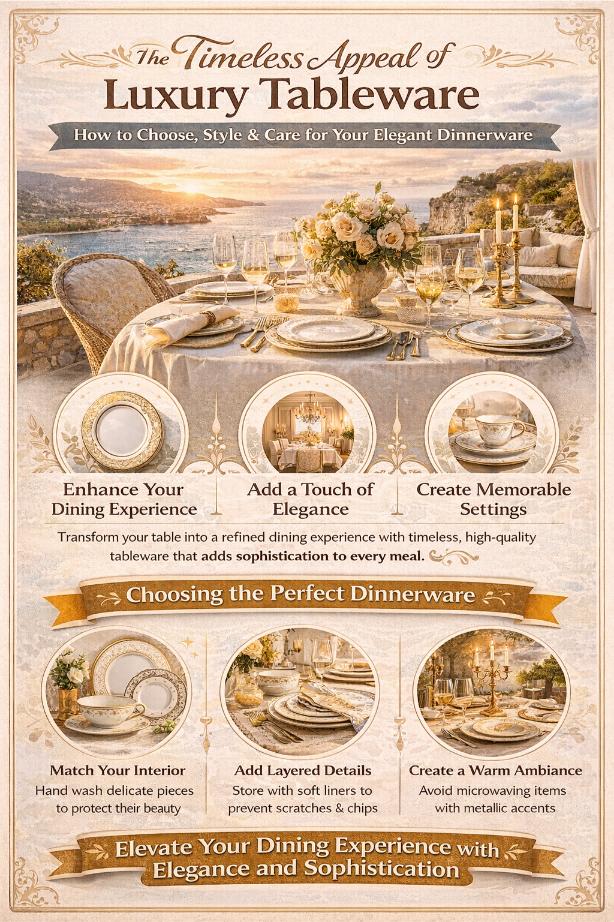
- Wash decorated pieces by hand. Detergent and sustained heat are what fade gilding and soften a glaze, not the water itself. A soft sponge and a mild detergent are enough.
- Never stack plates directly. Felt separators or plain kitchen paper between plates cost almost nothing and prevent the scratching that comes from grit trapped between two glazed surfaces.
- Check the manufacturer’s guidance before heating anything. Metallic accents and some hand-applied decoration react badly to a microwave, and a single use is enough to ruin a rim.
- Deal with grey marks early. Fine metal marks from cutlery lift with a mild ceramic cleaner while they are recent, and become permanent once they are worked into a worn glaze.
- Review the set once a year. Pulling out chipped pieces before they reach the table keeps the collection presentable and tells you what to replace while the pattern is still made.
The pieces around the plate
Dinnerware sets the register of a table, but it does not finish it. Linen introduces the texture that ceramics cannot, and it is the cheapest way to change the character of a service you already own: the same white porcelain reads formal on damask and relaxed on washed linen. Fabric napkins do more of that work than their price suggests.
Centrepieces follow one rule that matters more than any styling advice. Keep them low enough to see over, or tall and narrow enough to see past. A centrepiece that blocks the sight line between two guests has failed regardless of how it looks in a photograph.
Light is the element most often left to chance, and the one that most changes how a table reads. Warm, low, layered light flatters glaze and glassware, and a dining room lit only from a single ceiling fitting will make even a good service look flat. The same layering logic we set out in our guide to lighting a room without natural light applies to a dining table after dark.
What we would buy first
If a budget only stretches to one good decision, put it into six porcelain or bone china dinner plates with no decoration, and spend what is left on linen and glassware. Undecorated plates in a fine body work at a Tuesday dinner and at a Christmas table, take any styling you put around them, and survive being used rather than admired. Pattern, colour and the pieces that express a particular season can be layered in afterwards, cheaply, from a different maker, as taste shifts.
That approach also protects the part of tableware that has nothing to do with design. Plates that get used become the plates a family associates with particular meals and particular years, and no service acquires that by staying in a cabinet.
Working out the palette around the table?
Our piece on contrast in decoration covers how colour, material and texture hold together across a room, which is the decision that should come before the dinner service.